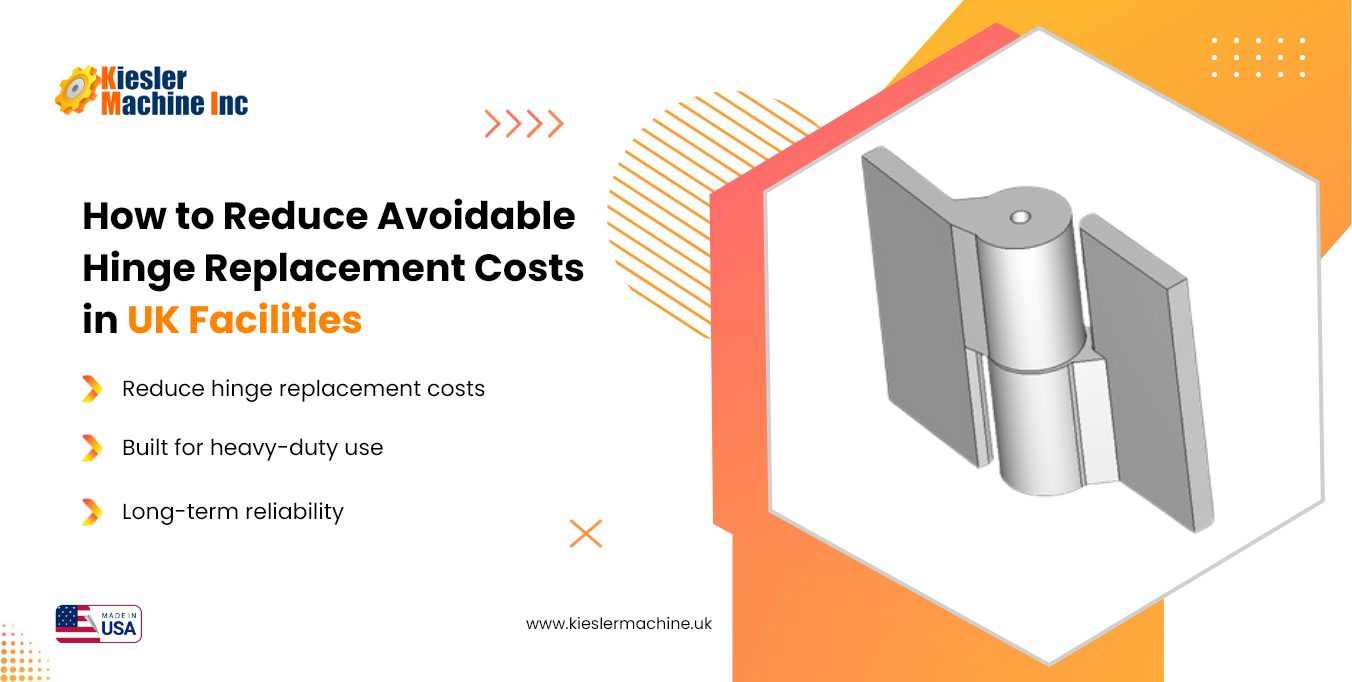
How to Reduce Avoidable Hinge Replacement Costs in UK Facilities
In commercial, industrial, and public-sector buildings across the UK, a hinge is more than a simple pivot point. It’s a load-bearing component that supports the full weight of the door, absorbs repeated impact, and maintains alignment through years of daily use. When a hinge is underspecified or poorly made, the effects are felt across the entire opening: latches begin to drag, frames distort, clearances tighten, and the door starts to bind. Over time, the price of that initial compromise grows far beyond the hardware itself, inflating the overall hinge replacement cost.
Low-priced hinges may look appealing on the invoice, but they introduce hidden costs almost immediately. Installers may spend extra time correcting a misalignment that then requires maintenance teams to return repeatedly to free a sagging door. When the hinge eventually fails, the damage can extend to the frame, the floor finish, or even to fire-rated or security-critical openings. What seemed inexpensive at the start becomes far more costly by the end of the service life.
Why Budget Hinges Struggle in Demanding UK Environments
Failures in low-cost hinges follow a familiar pattern: thin-gauge material that bends under load, soft pins that deform quickly, loose machining tolerances, and barrel designs never intended for the levels of footfall or abuse common in British commercial and industrial buildings. Once one part of the assembly weakens, the rest follows.
- A worn pin causes the door to drop.
- The additional weight transfers to the latch.
- The misalignment stresses the frame.
- Soon, the entire opening becomes a maintenance liability.
By the time the hinge needs replacing, the total corrective work may require the services of joiners, facilities engineers, and additional costs to repair collateral damage—simply because the original hardware was chosen for its price rather than for its performance. Kiesler Machine UK helps specifiers avoid industrial hinge replacement costs through precision-engineered, heavy-duty hinges designed for high loads, long service life, and demanding environments where reliability is non-negotiable.
How to Prevent the Unnecessary Hinge Replacement Cost
- Specify for the Real Load, Not the Nominal Door Weight
Door weights often rise once glazing, hardware, reinforcements, or cladding are added. Selecting a hinge with reserve capacity is the simplest way to ensure long-term reliability.
- Look Beyond Material Type—Evaluate Thickness and Pin Hardness
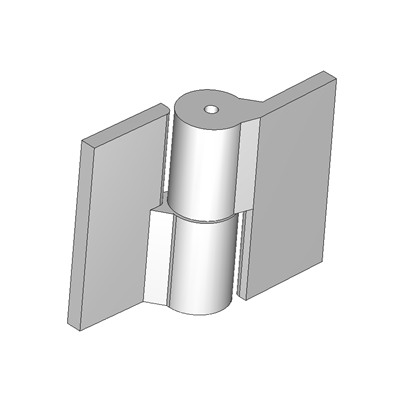
Thin leaf sections and mild-steel pins deform quickly under repeated impact. Opt for heavy-gauge construction, hardened pins, and full-barrel designs that resist sag and shear.
- Compare Tolerances, Not Just Dimensions
Two hinges may appear identical, yet their performance can differ dramatically. Accurate machining and matched components maintain alignment far longer than basic dimensions suggest.
- Choose Hinges Suited to the Environment
High-traffic corridors, coastal sites, humid interiors, service doors, and secure areas all place different demands on the hinge. A general-purpose hinge is rarely suited to these environments.
- Avoid Mixing Metals Within the Hinge Assembly
Pins, barrels, and leaves made from dissimilar metals can seize, corrode, or wear prematurely. A fully matched steel or stainless-steel construction avoids these problems entirely.
- Confirm That the Door and Frame Are Properly Reinforced
A strong hinge can still fail if it’s fixed to an inadequate structure. Reinforcement plates, proper fasteners, and correct preparation are essential for long-term performance.
- Prioritise Accurate Installation
Most hinge failures start small: a slightly mis-cut mortice, uneven screw tension, or a minor frame skew. A precise installation protects the hinge from premature wear and tear.
- Select Bearings Appropriate for the Duty Cycle
Washers may suffice for light internal doors, but heavy or high-cycle applications require bearings designed to disperse load and reduce friction over many years.
- Implement Routine Inspections Before Problems Escalate
A quick check for pin movement, leaf distortion, or early corrosion can prevent costly replacement later. Early intervention protects the door and frame as much as the hinge.
- Work With a Supplier That Provides Proven Load Data and Technical Support
Reliable performance depends on more than the hinge itself. Kiesler’s engineering support, long-life designs, and manufacturing consistency help reduce long-term risk across the entire opening.
Prevent the Costly Chain Reaction Before It Starts
When an industrial hinge fails, the actual cost extends well beyond the replacement part. Downtime, repeat maintenance, damaged openings, fire-door remediation, and compliance concerns all contribute to increased total expenses. The most effective strategy is selecting hardware engineered to withstand real-world loads and conditions from the outset. Kiesler Machine supplies heavy-duty hinges designed for demanding applications, providing UK specifiers and facilities teams with long-term reliability, predictable performance, and confidence that the door will withstand the daily demands placed upon it.
If you're ready to reduce failures, prevent unnecessary replacements, and improve whole-life performance on your next project, Kiesler Machine can help you specify the correct hinge for the application.