

Industrial doors and gates are only as reliable as the hinges supporting them. While most people focus on door materials, security systems, or locking mechanisms, the hinge is often the component carrying thousands of pounds of load every single day.
Choosing a hinge that is too small can lead to premature wear, alignment issues, safety risks, and expensive downtime. On the other hand, selecting the correct heavy-duty hinge ensures smooth operation, longer service life, and improved safety for personnel and equipment.
Whether you're specifying hinges for a security door, industrial gate, agricultural facility, manufacturing plant, or specialized enclosure, understanding hinge load capacity is essential.
This guide explains how industrial hinge sizing works, how load capacity is calculated, and how to determine the right hinge size for your application.
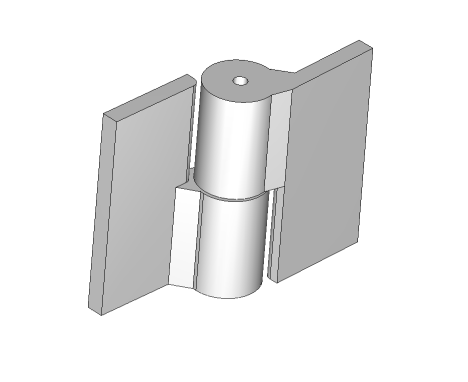
Unlike residential hinges, industrial hinges are designed to support extremely heavy loads while maintaining smooth movement over years of operation.
Heavy-duty hinges are commonly used on:
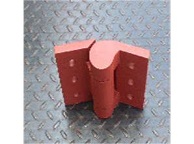
Industrial heavy-duty hinges supplied by Kiesler Machine UK can support door weights ranging from approximately 1,000 lbs to 40,000 lbs depending on the model and configuration.
When reviewing heavy-duty hinge specifications, you'll typically encounter two important load ratings:
This refers to the maximum weight the hinge can support vertically.
In simple terms, this is the weight of the door, gate, or panel hanging from the hinge.
For example:
Radial load refers to the force applied perpendicular to the hinge pin.
This force increases when:
Ignoring radial load is one of the most common causes of premature hinge failure.
Door Weight
The starting point is always the total weight of the door or gate.
This includes:
Always calculate the fully assembled weight rather than estimating.
Door Width
Wider doors create greater leverage on the hinge.
Two doors may weigh exactly the same, but the wider door generates significantly higher stress because the load acts farther away from the hinge line.
High-cycle applications benefit from heavy-duty hinges engineered for continuous operation and wear resistance.
Environmental Conditions
Environmental exposure directly influences material selection.
|
Environment |
Recommended Material |
|
Indoor industrial facilities |
Carbon steel |
|
Outdoor installations |
Galvanised or carbon steel or 304 stainless steel |
|
Coastal environments |
316 stainless steel |
|
Food processing facilities |
316 stainless steel |
|
Chemical processing plants |
316 stainless steel |
Mounting Method
Heavy-duty industrial hinges are generally available as:
Weld-on hinges are often preferred for permanent, high-load applications, while bolt-on options allow easier replacement and maintenance.
The following table provides a general guide for matching hinge size to door weight.
|
Approximate Door Weight |
Typical Hinge Size |
Typical Industrial Applications |
|
Up to 1,000 lbs |
5" × 4⅛" to 5" × 5" |
Utility doors, equipment enclosures |
|
Up to 4,000 lbs |
6" × 7 7/16" |
Industrial access doors |
|
Up to 8,000 lbs |
8" × 7 7/8" |
Heavy steel doors, security applications |
|
Up to 13,000 lbs |
8" × 8¼" to 9" × 6" |
Industrial gates and vault doors |
|
Up to 20,000 lbs |
12" × 10⅝" |
Large industrial doors |
|
Up to 25,000 lbs and above |
14" and larger |
Specialised heavy-duty installations |
Actual hinge selection should always be based on engineering calculations, installation conditions, and safety requirements.
Calculating Hinge Requirements
Email for a hinge sizing recommendation. Specifications needed are door or gate width, height and weight.
Choosing Based Only on Door Weight
Weight is important, but width and hinge spacing is equally important. Environmental exposure is important to select material or plating options.
Ignoring Future Operating Conditions
Facilities often expand or change operations.
A door that opens 20 times daily today may operate 200 times daily in the future.
Overlooking Corrosion
A carbon steel hinge may perform perfectly indoors but deteriorate rapidly in coastal or chemical environments.
Failing to Include Safety Margins
Industrial applications should never be specified at the absolute maximum rated capacity.
A reasonable safety margin helps accommodate unexpected loads and extends service life.
Different hinge designs are suited to different applications.
Heavy-Duty Butt Hinges
Ideal for:
The benefits of heavy-duty butt hinges are that they have excellent load distribution and proven reliability.
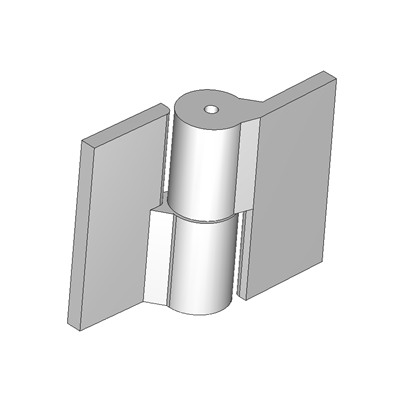
Barrel Hinges
Barrel hinges are commonly selected for:
Their robust construction makes them suitable for demanding environments.
Pivot Hinges
Pivot hinges are often used when:
Model K Hinges
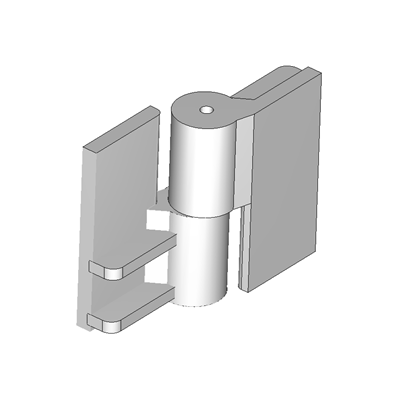
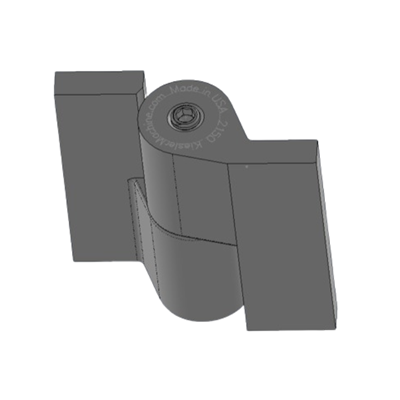
Model K hinges are designed for heavy industrial applications requiring exceptional durability and load-bearing capability. Depending on the configuration, these hinges can support loads from 1,000 lbs to 13,000 lbs.
If you're evaluating an existing installation, watch for:
These issues often indicate the hinge is operating beyond its intended load range.
Many industrial applications do not fit standard specifications.
Custom heavy-duty hinges may be required when:
Custom-engineered solutions help ensure optimal performance and long-term reliability.
Selecting the correct heavy-duty hinge is far more than matching a hinge to a door weight. A successful specification considers vertical load, radial load, door dimensions, environmental conditions, and installation requirements.
For industrial facilities across the UK, the right hinge can mean the difference between decades of reliable service and recurring maintenance problems.
If you're specifying hinges for a heavy industrial door, security enclosure, gate, agricultural facility, or specialised project, it's always worth consulting an experienced hinge manufacturer before making a final selection.
The cost of choosing the wrong hinge is often far greater than the investment in selecting the right one from the start.
Share this: